


Improving environmental outcomes
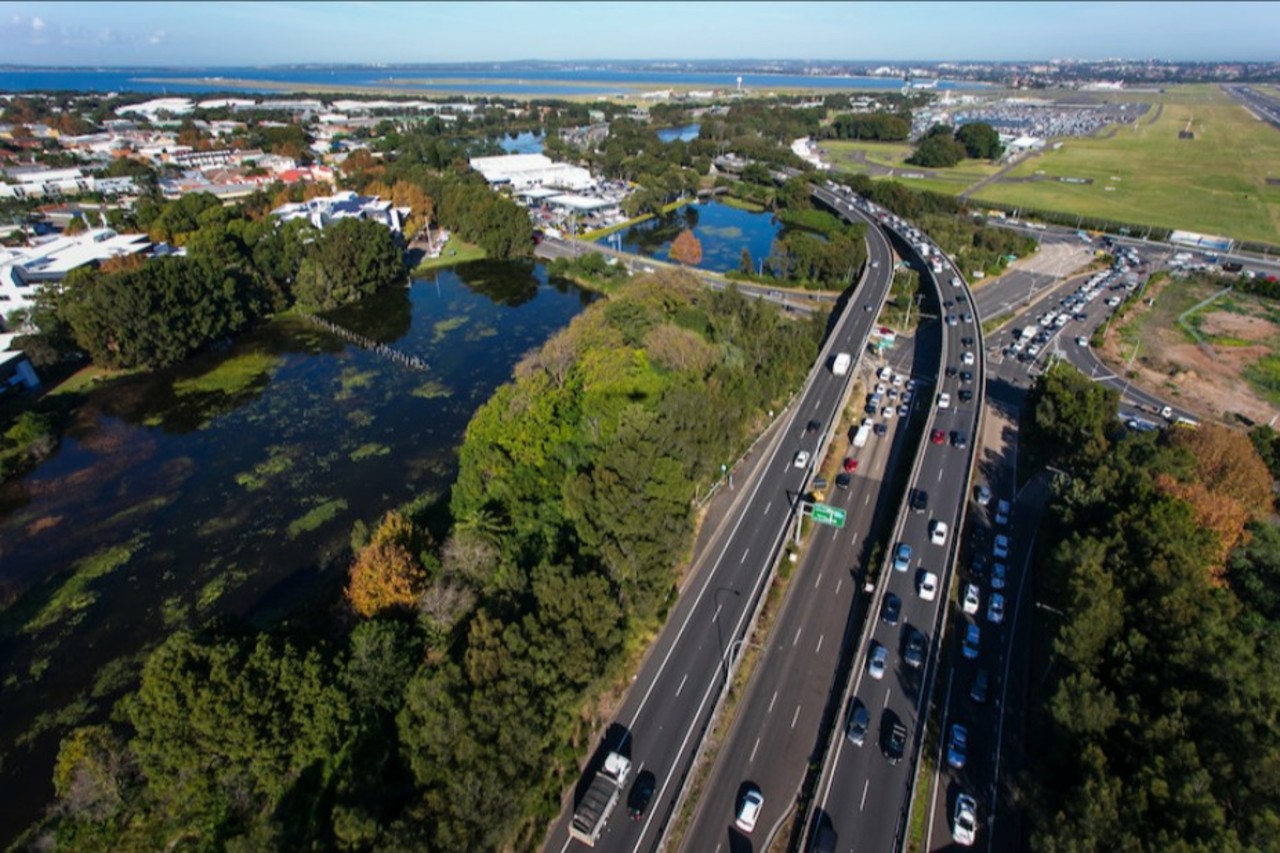
We operate wet weather overflow points at Mill Stream on the eastern side of Sydney Airport at Mascot. These are part of the Malabar wastewater system, which services about 2 million Sydneysiders. They're an essential part of the wastewater network.
About this project
We take our environmental responsibilities seriously, and we've made significant progress in improving environmental outcomes at Mill Stream.
Wet weather overflows are an important public health control and standard design practice for developed countries all over the world. There are wet weather overflow points at Mill Stream, which are part of our operational network. These overflows are part of the Malabar wastewater system, which services about 2 million Sydneysiders.
The overflows are on land that Sydney Airport leases from the Federal Government, and are regulated by the Airports (Environment Protection) Regulations 1997 (AEPR). The AEPR requires us to apply for an authorisation to the Department of Infrastructure, Transport, Regional Development, Communications Sport and the Arts (DITRDCSA). We were granted a 3-year authorisation to operate the overflow points at Mill Stream, effective from 7 June 2024 to 31 March 2027.
We're implementing several short-term actions to reduce the volume and frequency of overflows at Mill Stream. We're also investigating options for a long-term solution that will improve the entire Malabar wastewater system while catering for growth and supporting resilience.
A key part of this work is the Malabar System Investment Program, which is delivering major upgrades across Sydney's wastewater network to increase capacity, improve reliability, reduce environmental impacts, and strengthen resilience to support future growth and extreme weather. These investments will improve the overall performance of the Malabar wastewater system and contribute to better environmental outcomes over the long term.
For more information about the upgrades, please visit our project website: Malabar system investment program
We're working closely with the DITRDCSA, the community and other stakeholders (including Sydney Airport, Bayside Council, Port Authority NSW and the NSW Environment Protection Authority) on this important project.
Benefits
By reducing wet weather overflows and improving the wastewater system, we aim to:
- improve water quality and reduce pollution
- protect public health and the environment
- increase the resilience of the wastewater system during extreme weather events
- support population growth and future development across Sydney
- improve the overall performance and reliability of the Malabar wastewater system
- deliver long-term environmental improvements for Mill Stream and surrounding waterways.
Upcoming community engagement opportunities
We are committed to keeping the community informed and providing opportunities to learn more about the project, ask questions and share feedback. We will continue to update this page with upcoming community engagement opportunities as they are confirmed.
Please see below for the latest opportunities to engage with us.
- Combined Precinct Meeting with Bays and Beaches
Sydney Water will be attending the Combined Precinct Meeting with Bays and Beaches on 30 November 2026. Further details will be published once confirmed.
- Have your say!
Sydney Water is currently undertaking its re-authorisation process and wants to hear from you! Tell us what you think we're doing well, where we can improve, and what you'd like to see us focus on in the future. We welcome all feedback and appreciate any input. Visit our get in touch section to send us an email
Project timeline
Project updates
Annual report now available
We have published our compliance report for operating Emergency Relief Structures located on Sydney Airport land that discharge to Mill Stream.
Community information session
We held a community information session to provide an update on our work to improve the environment at Mill Stream. We take our environmental responsibilities seriously, and we shared the progress we’ve made.
Annual report now available
We have published our compliance report for operating Emergency Relief Structures located on Sydney Airport land that discharge to Mill Stream.
You're invited to a community information session
You're invited to a community information session for an update on our work to improve the environment at Mill Stream. We take our environmental responsibilities seriously, and we'd like to share with you the progress we’ve made.
Mill Stream authorisation
We were granted a 3-year authorisation to operate the overflow points at Mill Stream, effective from 7 June 2024 to 31 March 2027 .
Notice of application for renewal of Mill Stream authorisation
We have reapplied for authorisation to periodically discharge diluted wastewater overflows during wet weather into Mill Stream at Sydney Airport.
Progress on improving Mill Stream
We have been working hard to deliver on actions as part of our Authorisation conditions at Mill Stream for the past 3 years.
Grace Campbell Reserve in Hillsdale
We've finished desilting work on the South Western Sydney Ocean Outfall Sewer (SWSOOS) 1 trunk. This is part of our commitment to improving environmental outcomes at Mill Stream.
Photos and videos


More information
FAQs
Sydney Water is preparing an Environmental Management Plan (EMP) and an application for a new Authorisation for the Mill Stream Emergency Relief Structures (ERS) for the proposed period 1 April 2027 to 31 March 2030. These FAQs explain the proposal and the difference between providing feedback to Sydney Water and making a formal submission. The proposed documents are subject to regulatory assessment and decision. These FAQs do not replace the application, the EMP, the applicable legal requirements or any Authorisation issued by the regulator.
The Mill Stream ERSs provide a relief point for excess wastewater flows, helping to reduce the risk of wastewater backing up in the sewer network and causing uncontrolled overflows or property flooding. Their operation can discharge wastewater to Mill Stream and requires environmental regulation. Sydney Water is preparing a new application for the 2027–2030 period because the existing Authorisation covers a defined period. The EMP describes the proposed environmental management actions, monitoring, reporting and engagement arrangements. The Authorisation, if granted, would set the conditions under which the undertaking may operate. Sydney Water proposes the documents; the relevant regulatory decisionmaker determines whether to grant the Authorisation and what conditions to impose.
The draft documents retain core measures such as overflow monitoring and notification, maintenance, incident response and annual compliance reporting. Proposed changes include replacing selected fixed project completion requirements with defined milestones and evidence of progress; updating the water-quality monitoring and assessment approach; introducing a targeted noise impact assessment; and updating reporting on the Malabar System Investment Program and longer-term planning. Six-monthly progress reporting and more flexible community engagement formats are also proposed. Some completed one-off requirements would not be carried forward, and some other requirements are proposed for amendment or removal. Table 3 of the draft EMP explains the proposed treatment of earlier conditions and the reasons for those changes. A proposed change does not itself amend an existing obligation.
The proposal includes measures intended to reduce overflow frequency and volume, together with proposed performance targets. The draft Authorisation proposes a target of 10–12 overflow events and/or a total overflow volume of 928–1,115 megalitres for the reporting year ending 31 March 2030, with progress to be demonstrated in earlier reporting years. A megalitre is one million litres. These proposed targets are not a guarantee of the number or volume of overflows in any particular year. Actual events depend on rainfall, network conditions and delivery of improvement works. Modelled forecasts estimate performance under specified assumptions; they are different from records of actual events. The draft Authorisation describes assessment using events in the final reporting year, while the EMP also discusses modelled forecasts. The final assessment method and any changes from existing requirements remain subject to confirmation through the regulatory process.
No. Feedback given to Sydney Water while the documents are being prepared is separate from the formal submission process for a lodged application. Early feedback helps Sydney Water identify issues and refine its proposal. If you want your views considered as a formal submission, follow the instructions and deadline in the official application notice.
For copies of the proposed EMP and Authorisation documents, or information about their availability, contact Sydney Water’s Environmental Regulation team at environmentalregulation@sydneywater.com.au. When the application is advertised, refer to the official notice for the documents available for inspection, the formal submission recipient, submission requirements and closing date. Use the channel specified in that notice to make a formal submission. Sending an enquiry to Sydney Water is not a substitute for following the formal submission process.
Sydney Water is the applicant, not the approval authority. The application is intended to be submitted to the Airport Environmental Officer (AEO) for assessment under the applicable Commonwealth airport environmental framework. The authorised regulatory decision-maker determines the application and any conditions. Feedback provided directly to Sydney Water can inform preparation of the proposal. Formal submissions are made through the process identified in the official notice for consideration in the regulatory assessment. Neither consultation nor lodgement guarantees approval or a particular outcome.
Feedback sent to Sydney Water during preparation of the documents can inform revisions to the proposal. Providing feedback does not mean every suggested change will be adopted. Formal submissions follow the separate regulatory process described in the official notice. Refer to that notice and any accompanying privacy information for details about acknowledgement, responses, publication of submissions and communication of the decision. For an update on feedback you have sent directly to Sydney Water, contact environmentalregulation@sydneywater.com.au.
You can send written questions about the proposed EMP and Authorisation to environmentalregulation@sydneywater.com.au. Please identify the topic or document section and explain the information you are seeking. You can also contact the team to ask about available engagement opportunities or assistance to access the information. Online attendance or other participation options depend on the arrangements for each activity; check the relevant invitation or notice. Asking a question or attending a session does not automatically constitute a formal submission or extend a submission deadline.
The draft EMP includes sewer desilting, work to reduce wet-weather inflows, grit-pit maintenance, investigations and development of wastewater screening at pumping station SP0038, and progress on broader Malabar system improvements. It also includes environmental monitoring and assessment. These activities are at different stages: an investigation or planning action is not a commitment to complete construction during 2027–2030. Delivery can depend on technical feasibility, investment decisions, access and external approvals. The proposed reporting framework includes monthly operational information, six-monthly progress reporting and annual compliance reporting. Reports would describe progress, delays, dependencies and corrective actions. The draft Authorisation proposes publication of annual compliance reports on Sydney Water’s public website within 30 days of their submission to the AEO, supported by stakeholder and community updates.
The draft EMP includes continuous overflow monitoring and water-quality monitoring to help assess wastewater-system performance and conditions in Mill Stream. The proposed water-quality program distinguishes routine monitoring from targeted investigation of selected contaminants. Results need to be interpreted alongside rainfall, tides and other catchment influences, and may not identify the contribution of a single source on their own. The draft Authorisation proposes assessment of validated water-quality results in annual compliance reports and a separate water-quality monitoring report by 1 August 2029. Annual compliance reports are proposed to be published on Sydney Water’s public website. Availability of other reports or datasets can be checked with the Environmental Regulation team.
The core overflow notification arrangements are proposed to continue for the AEO, Sydney Airport and Bayside Council. Separate requirements apply to incidents involving material harm, and additional notification arrangements are being considered through the draft review. Routine overflow notifications and material-harm incident notifications are not necessarily sent to the same recipients. The final requirements will depend on the applicable obligations and issued Authorisation. Other councils or stakeholders can raise a request to receive notifications with Sydney Water’s Environmental Regulation team. A request does not automatically add a recipient or change a mandatory notification requirement.
The draft EMP describes the basis for the proposal, including the improvement program, overflow performance forecasts and supporting environmental information. It also identifies supporting water-quality and odour reports. For help locating relevant reports, historical overflow information or modelling summaries, contact environmentalregulation@sydneywater.com.au and specify the topic and period you are interested in. Actual overflow records describe recorded events; hydraulic modelling estimates performance under stated rainfall, network and project assumptions. They should not be treated as interchangeable. The availability, completeness and comparability of historical information need to be checked for the period requested. Not all underlying datasets are necessarily available for public release.
Lodging an application does not, by itself, demonstrate that the existing Authorisation continues beyond its stated period. The position would depend on the applicable law, the terms of the current Authorisation and any further regulatory decision or arrangement. Confirmation from the regulator would be needed before describing any interim arrangements. The proposed 2027–2030 documents should not be taken as evidence that a new Authorisation has been granted or that an extension applies.
Emergency Relief Structures are designed overflow points within Sydney Water's wastewater network. They provide a controlled pathway for excess diluted wastewater to leave the network when flows exceed available system capacity, helping reduce the risk of wastewater backing up and flooding homes and businesses.
The Mill Stream ERSs are designed to operate during wet weather.
Yes. Wet weather overflows and Emergency Relief Structures. are a standard feature of wastewater systems in Australia and many other developed countries.
A wet weather overflow can occur during or following rainfall when additional water enters the wastewater system and increases flows through the network. Emergency Relief Structures such as those at Mill Stream provide designated overflow points to help manage these increased flows.
A dry weather overflow occurs when wastewater escapes from the system for reasons unrelated to increased flows from rainfall. Dry weather overflows are generally associated with faults or problems within the wastewater network and are not the intended operation of the Mill Stream ERS.
- Actual overflows are overflow events that have occurred, rather than events predicted by a model. Their frequency can vary depending on rainfall, so wetter years may experience more overflows than drier years.
- Modelled overflows are used to assess how the wastewater system would perform under consistent rainfall conditions. This allows Sydney Water to compare performance over time without results being influenced by differences in annual rainfall.
- Modelling also helps Sydney Water assess whether improvements to the wastewater system are reducing overflow risk.
- Sydney Water reports on both actual and modelled overflow performance in the Annual Environment Management Plan Compliance Report, available on Sydney Water's Mill Stream webpage.
During wet weather, rainwater can enter the wastewater network and significantly increase flows (up to 10 times that of base flow). When flows exceed available capacity, the Mill Stream ERSs allow excess diluted wastewater to overflow at designated locations. This helps reduce the risk of wastewater backing up and flooding homes and businesses.
Sydney Water owns and operates eight Emergency Relief Structures at Mill Stream. They form part of the Malabar wastewater system, which services about 2 million Sydneysiders.
The Mill Stream Emergency Relief Structures are located on the eastern side of Sydney Airport at Mascot and discharge during wet weather.
Overflows enter the channel downstream of Mill Pond. Mill Stream and Mill Pond are separated by an approximately 2-metre-high weir.
The Mill Stream ERSs form part of the Malabar wastewater system, a large and complex network serving around 2 million people.
During significant wet weather, ERSs provide designated overflow points when flows exceed available network capacity, helping reduce the risk of wastewater backing up into homes and businesses. Sydney Water's focus is on reducing the frequency, volume and environmental impacts of wet weather overflows while continuing to improve the wastewater system.
No. The Mill Stream ERSs are located on Sydney Airport land and are not accessible to the public. Access to the area is controlled by Sydney Airport.
When the Mill Stream ERS operates, diluted wastewater is discharged into Mill Stream and can temporarily affect water quality in Mill Stream and nearby waters.
The extent and location of impacts can vary between overflow events.
When the Mill Stream ERS operates, diluted wastewater overflows into Mill Stream and can temporarily affect water quality in Mill Stream and nearby waters. The extent and location of impacts vary depending on factors including overflow volume and duration, rainfall, tides and background water quality.
Monitoring and modelling indicate that impacts are typically greatest immediately downstream and reduce further from the discharge location. Conditions can vary between locations and overflow events.
Water quality modelling and routine sample collection conducted as part of the Mill Stream Authorisation indicates that water quality impacts from Mill Stream discharges typically significantly reduce by the end of the Mill Stream and return to near baseline conditions by the end of the third airport runway. These findings do not mean the water quality is the same at every location or during every overflow event.
For current recreational water quality information at individual swimming locations, customers should check NSW Government Beachwatch.
For current recreational water quality information and swimming advice, check NSW Government Beachwatch, particularly during and following wet weather.
Beachwatch is the independent NSW Government source of public advice on recreational water quality and swimming conditions.
Beachwatch considers location-specific water quality information, including routine monitoring, predictive modelling and reported pollution incidents, to provide advice about swimming suitability. This provides a more complete picture of conditions at individual swimming locations than relying on a wet weather wastewater overflow alone.
Check current swimming conditions on NSW Government Beachwatch
Beachwatch provides water-quality monitoring results and pollution forecasts for monitored swimming locations. A sample result reflects conditions when the sample was collected, while a forecast indicates the likelihood of pollution.
Beachwatch forecasts are updated during the day using information including recent rainfall, known pollution sources and environmental conditions. They should not be interpreted as continuous real-time water-quality measurements.
An overflow notification confirms that an event has occurred at the Mill Stream ERS but does not by itself determine water quality at individual swimming locations.
Water quality can vary between locations and is influenced by rainfall, tides, other pollution sources and environmental conditions.
For current recreational water-quality information and swimming advice, check NSW Government Beachwatch.
Sydney Water's investigation identified the Mill Stream ERS as the most likely source of debris balls found on Botany Bay beaches.
For information about the investigation, findings and what to do if you find debris balls, visit:
The number of overflows varies from year to year, depending on rainfall and conditions within the wastewater network. Overflows can occur during or following a significant rainfall event.
Sydney Water has been working to reduce the frequency and volume of overflows through network upgrades, maintenance and operational improvements.
Information about actual overflow events for each reporting period is included in the Annual Environment Management Plan Compliance Reports, available on Sydney Water’s Mill Stream webpage.
Sydney Water continuously monitors the Mill Stream ERS to identify when overflow events occur. Information collected supports reporting on overflow frequency, duration and volume.
Sydney Water also undertakes environmental monitoring and inspections to understand potential impacts and inform appropriate response actions. Operational monitoring of the ERS is different from environmental monitoring of the receiving waters and should not be interpreted as continuous, real-time water-quality monitoring.
Under the current Commonwealth Authorisation, Sydney Water must notify the Airport Environment Officer, Sydney Airport and Bayside Council of an overflow event within 24 hours of becoming aware of the event.
Sydney Water also engages with relevant regulators and stakeholders through established Mill Stream governance and reporting arrangements.
Following overflow events, Sydney Water inspects Mill Stream and Foreshore Beach to assess whether gross pollutants (such as litter) are present and whether clean-up is required.
Where required, clean-up activities are undertaken and information about the event and environmental response is recorded. Additional notification and response requirements apply where an incident meets relevant environmental reporting thresholds.
If you have concerns about collected material, loose debris or a possible spill around Mill Stream or Foreshore Beach, report it to Sydney Water on 13 20 90, available 24 hours a day.
Please provide the location and when you observed it, and avoid touching or moving suspected wastewater-related material.
If you notice an unusual or unpleasant odour around Mill Stream, please report it to Sydney Water so it can be investigated.
When reporting an odour, please include the location, the date and time you noticed it, and whether it is ongoing or intermittent. These details can help Sydney Water assess and investigate the report.
For faults and emergencies, contact Sydney Water on 13 20 90, 24 hours a day.
Sydney Water is undertaking actions to reduce environmental impacts and improve how Mill Stream overflow events are managed.
These actions are set out in the Mill Stream Environment Management Plan and include environmental monitoring, post-overflow inspections and clean-up, management of gross pollutants and environmental improvement actions.
Progress against these actions is reported through the Annual Environment Management Plan Compliance Report.
More information about environmental management, improvement work and annual compliance reporting is available on Sydney Water's Mill Stream webpage.
Sydney Water is delivering the Malabar System Investment Program to upgrade wastewater infrastructure across the Malabar system.
The program includes upgrades to wastewater treatment facilities, pipelines and supporting infrastructure to increase treatment capacity, improve reliability and environmental performance, and strengthen the system's resilience to growth and wet weather.
Sydney Water is undertaking broader work across its wastewater network to reduce the frequency and impact of wet weather overflows.
This includes investigating wastewater networks, identifying opportunities for improvement and carrying out targeted work to improve how the wastewater system operates.
More information is available on Sydney Water's Wastewater Fix webpage.
Everyone can help protect the wastewater system and the environment by being careful about what goes down toilets, sinks and drains.
For example:
- Keep fats, oils and grease out of sinks and drains.
- Put tissues, paper towels and cotton buds in the bin, not the toilet.
- Do not flush non-flushable wipes.
These actions help reduce blockages that can cause wastewater overflows. They do not prevent all wet weather overflows, which can occur when rainfall-related flows exceed available network capacity.
Find out more on Sydney Water's Avoid wastewater overflows webpage.
The Mill Stream ERS is located on federally owned land at Sydney Airport and operates under an Authorisation issued under the Commonwealth Airports (Environment Protection) Regulations 1997.
The Department of Infrastructure, Transport, Regional Development, Communication, Sport and the Arts (DIRDCSA) is the Federal Department that administers the Regulation.
The Authorisation includes requirements for environmental monitoring, overflow performance, incident notification, reporting and environmental improvement.
The Mill Stream ERS forms part of Sydney Water's Malabar wastewater system. The broader Malabar[AP1] wastewater system is regulated under NSW environmental legislation, including the Protection of the Environment Operations Act 1997, and Environment Protection Licence 372.
The Mill Stream Environment Management Plan sets out how Sydney Water manages environmental risks associated with the operation of the ERS.
It includes environmental monitoring, incident response, management of gross pollutants (such as litter), stakeholder engagement and environmental improvement actions.
Sydney Water prepares an Annual Environment Management Plan Compliance Report covering the environmental performance of the Mill Stream ERS, compliance with the requirements of the Commonwealth Authorisation, and progress in implementing the Environment Management Plan.
The report includes information on overflow performance, environmental monitoring and water quality, environmental complaints, gross pollutants and environmental improvement actions.
Annual compliance reports are available on Sydney Water's Mill Stream webpage.
Sydney Water engages with Commonwealth and NSW regulators and key stakeholders through established Mill Stream meetings, and reporting activities[AP1] .
The Mill Stream Stakeholder Reference Group provides a forum to share information about environmental performance, monitoring and improvement initiatives and for stakeholders to provide feedback.
If you see pollution, debris balls or suspected wastewater-related material around Mill Stream, Foreshore Beach or Botany Bay, avoid touching the material and report it to Sydney Water on 13 20 90, 24 hours a day.
When reporting a concern, please provide the location, the date and time you observed it, and a brief description of what you saw. These details can help Sydney Water assess the report and determine any action required.
Pollution incidents can also be reported to the NSW EPA Environment Line on 13 15 55.
For general questions or feedback about Mill Stream, please use the enquiry contact details on Sydney Water’s Mill Stream webpage.
Include a brief description of your question or concern, any relevant dates and locations, and your preferred contact details. If you are following up an existing enquiry or complaint, include your reference number, if available, to help us locate the related information.
Some enquiries may require technical input or a review of records before a response can be provided.
Check NSW Government Beachwatch for current recreational water quality information and swimming advice, particularly during and following wet weather.
Beachwatch water quality information
For information about recreational water quality, visit the NSW Government’s Beachwatch website. Beachwatch monitors swimming locations across NSW and provides water quality information to help the community make informed choices about where and when to swim.
View Beachwatch water quality information