


Log in
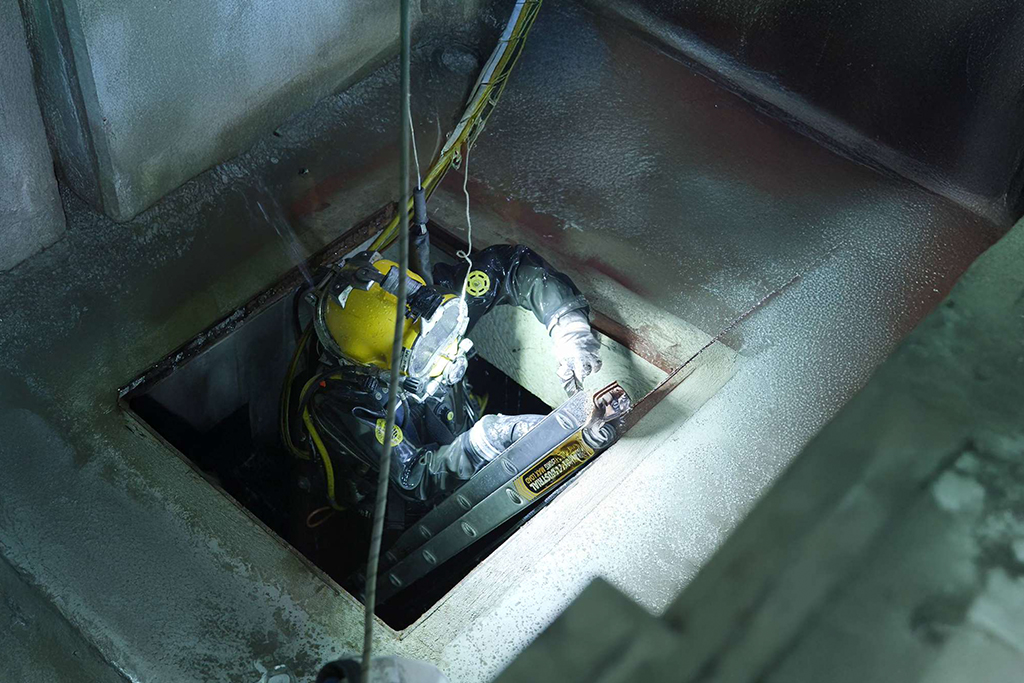
Because our wastewater pipes can never be emptied, some lucky person has to take a deep dive.

Your life can be just a little easier when you're registered with My Account.
Article quick links
Alan's job is c#@p and he loves it!
The less you know about raw sewage, the happier you'll be.
Admit it. You don't want to be exposed to the stinky innards of our wastewater system – if it's working properly, that's enough.
But because our wastewater pipes can never be emptied, some lucky person has to take a deep dive.
That's where Alan comes in
Specialist divers like Alan go deep into the pipes that remove wastewater from homes and businesses. He does the dirty work for you (that is, critical surveys and inspections), and you'll never know he was there.
People don't want to know about the sewer. They only want to know it's operating properly, and that's what we're trying to do.
Don't try this at home
Sewer diving is not for everyone. We only use trusted contractors who are intimately acquainted with our pipes.
Discover wastewater's long journey
Find out more about where water goes after it leaves your home and our wastewater systems.
Sign up for My Account: what's holding you back?
Your life can be just a little easier when you're registered with My Account.
We can walk you through the process
If you'd like someone by your side to help guide you through the online registration form, we've created a step-by-step video.
What is My Account, anyway?
My Account is your 24/7 DIY customer portal. It's where you can:
- view and pay bills
- set up direct debit
- switch to paperless (you could win a $200 eGift card!)
- request 3 years of financial statements
- arrange payment extensions
- update personal details.
As one customer told us: "It's so easy and seamless that I almost don't notice I’m paying the bill! … I literally had to go check my account to see if I was receiving electronic bills."
So sign up now!
Grab your paper bill to find your online ID and payment number. The video's there if you need it.

Don't fall for plumbing pressure tactics
Know your rights and avoid costly surprises during emergencies.
Plumbing emergencies are stressful, but rushing into repairs could cost you thousands. We've seen an increase in cases where some unscrupulous plumbers have:
- overcharged for private plumbing work
- pressured customers to start work
- wrongly told customers that we'd reimburse private repair costs.
How to protect yourself
Contact us before the plumber starts emergency repairs. Issues like blockages in our mains may be our responsibility.
We may reimburse the plumber's reasonable costs to identify and report the issue, but we can't cover repairs on private pipes that we don't own.
When you engage a plumber:
- If you can, get 2 quotes before agreeing to major work.
- Always question unusually high prices – you may be able to check with another licensed plumber.
- If the plumber says we'll reimburse you for high costs, contact us before work begins.
- Don't sign any agreement without getting a copy up front.
Do you think you've been misled or overcharged? Report it to Building Commission NSW.
Don't be caught out
Find out who's responsible for what at General plumbing information.

New prices for 2026–27
IPART set our prices for 2025–30 to help us continue providing safe and reliable services while improving ageing infrastructure and supporting growing communities.
The price changes are spread over 5 years, updated annually to reflect inflation.
Quarterly water quality report summary
Our water quality monitoring program confirmed that Greater Sydney's drinking water remains high quality and safe from April to June 2026, meeting the high standards set by the Australian Drinking Water Guidelines.
Find the detailed quarterly water quality report for your area at Water analysis under 'Water quality report'.
-

Filtered
We filter your water by removing debris, adjusting pH, binding fine particles into flocs, and passing it through sand and coal filters.
-

Treated
We use various methods to improve water quality, including disinfection, pH adjustment, and the use of chemicals to remove or inactivate contaminants.
-

Tested
We keep a close eye on every drop, testing it at every step to ensure it meets the strict Australian Drinking Water Guidelines so it is clean and safe to drink.

Customer Contract
This contract is our service guarantee to you, and outlines your rights and obligations as a Sydney Water customer.
Challenges of preserving a historic landmark
So how do you repair working infrastructure that also happens to be heritage listed?
The answer is very carefully indeed!
You may know the iconic Ben Buckler ventilation shaft as a feature of North Bondi's coastline. It was built in 1910, replacing the original brick tower erected in 1888.
You may not know that we own it: it's a vital part of our Bondi Water Resource Recovery Facility. So it's up to us to maintain it.
Imagine: 110 years of ongoing damage
Relentless salt spray creates cracks, flaking concrete and rusted steel that require painstaking intervention.
But the shaft's age and heritage value present unique challenges. For example, it prevents us using traditional scaffolding that touches the towering structure.
Innovation to the rescue
The ingenious solution is a giant, tailor-made freestanding cage. Weighing 80 tonnes, it's anchored by 63 piles driven deep into former landfill, complete with capping beams and temporary steel supports.
Project engineer Bosco Chow says "The Ben Buckler vent stack is more than infrastructure. It's a bold piece of Sydney's engineering heritage standing watch over one of the world's most famous beaches."
Repairs may be ready for you to admire by the time you read this article.
Meanwhile, we're proud to protect the shaft's historical significance and its vital role in keeping our city clean and safe.
Find out more about how we're improving wastewater services for Bondi.
Help to pay your bill
Take the pressure off with payment plans, free essential plumbing and hardship support. Explore the options to get help with your water bill, or call 1800 222 280 8am–5:30pm Monday to Friday (except public holidays).


How much do you know about wastewater?
Take Jila's quiz and see how many questions you can get right about what goes into our wastewater pipes!
- Question 1
- Question 2
- Question 3
- Question 4
What can be flushed down the toilet?
What can't be poured down the sink?
Approximately how many wastewater blockages does Sydney Water clear every year?
Can milk go down the sink?

Pipe dramas? Dr Pipes to the rescue!
Get ready for blocked toilets, sink disasters and soap-opera chaos, all in the name of protecting our wastewater system
Why the drama? Because wastewater blockages are a big deal. Each year, we spend almost $24 million clearing more than 12,000 wastewater blockages all over Greater Sydney. Many are caused by everyday items that should never go down the toilet or sink. Think non-flushable wet wipes, fats, oils, grease and food scraps.
Watch all our binge-worthy Pipe Dramas
These 6 micro-dramas have an edge-of-the-toilet-seat message:
- Only flush the 3 Ps – pee, poo and toilet paper.*
- Only put water, detergent and soap down the sink.
Keep an eye out for the twists, the turns and the suspiciously dramatic sink scenes. Relationships are tested and bad habits exposed – but the charismatic Dr Pipes is never too far away to save the day. Remember: when it comes to wastewater, the real plot twist is that what disappears down the drain can come back as a very messy problem.
Before it's too late …
Help spread the word: only flush the 3 Ps, and keep fats, oils and grease out of the sink. Find out which Pipe Dramas are happening in your home, and view all 6 dramatic episodes!
*Plus any products that have met the Flushable Products Standard (AS/NZS 5328:2022).
Meet the Pipe Dramas characters causing chaos, above ground and below.